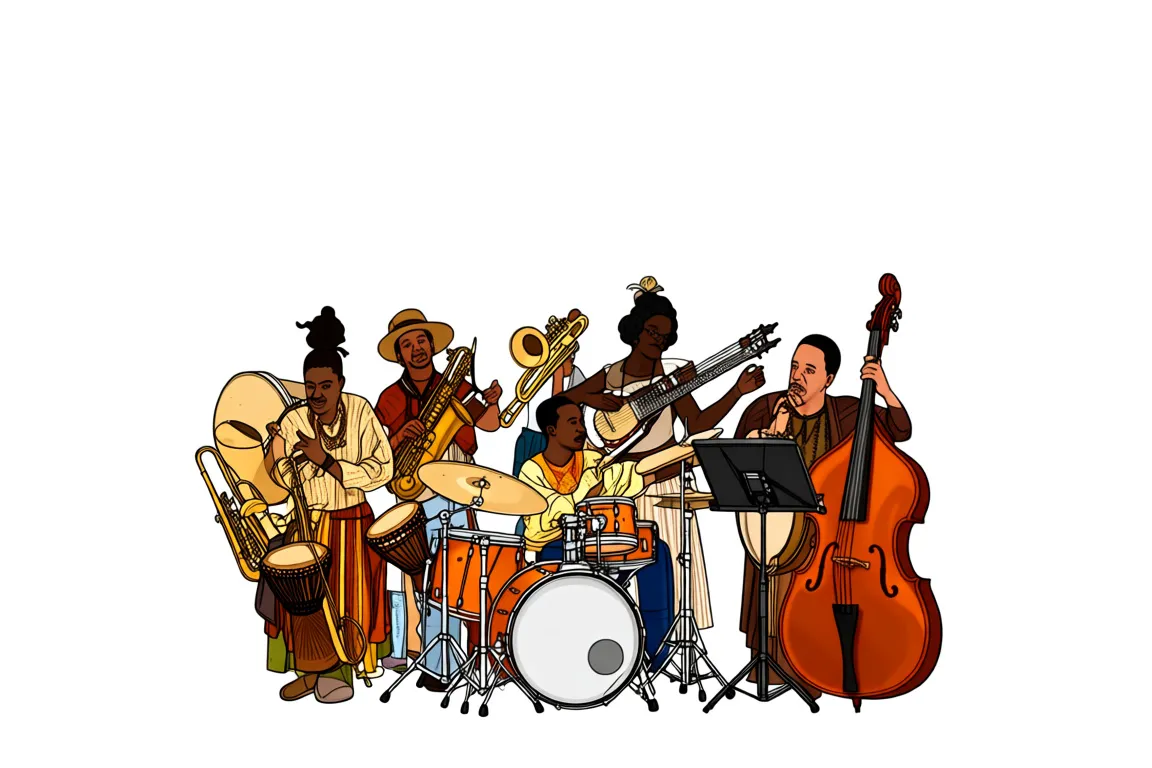
The Influence of World Music on Modern Jazz
World music has fed modern jazz for decades. You hear it in the rhythms, scales, and textures that players now treat as normal tools rather than exotic add-ons.
Early Exchanges That Stuck
John Coltrane studied Indian ragas in the early 1960s and folded their long, modal lines into albums like A Love Supreme. A few years later Miles Davis pulled in African and Indian percussion on Bitches Brew. These moves gave jazz new ways to stretch time and harmony without losing swing.
Rhythms and Scales You Meet Most Often
Three elements show up again and again in current recordings:
- Odd-meter grooves from West Africa and the Balkans, used by bands like Snarky Puppy on tracks such as “Lingus”
- Quarter-tone bends and microtonal phrasing borrowed from Middle Eastern music, common in Avishai Cohen’s work
- Clave-based pulse and layered percussion from Cuba and Brazil, heard in the rhythm sections of artists like Miguel Zenón
| Influence | Artist Example | Result in the Music |
|---|---|---|
| Indian raga | John Coltrane | Extended modal solos |
| African 12/8 | Herbie Hancock (Sextant era) | Polyrhythmic vamps |
| Brazilian partido alto | Eliane Elias | Light, dancing swing feel |
How to Listen for These Sounds
Pick a recent album and run through this quick check:
- Count the pulse in groups of three or five instead of straight four
- Listen for drones or open strings under the solo
- Note any percussion that sits slightly ahead or behind the main beat
Apply the same steps to Kamasi Washington’s The Epic or Linda May Han Oh’s recordings and the borrowed elements become obvious fast.